
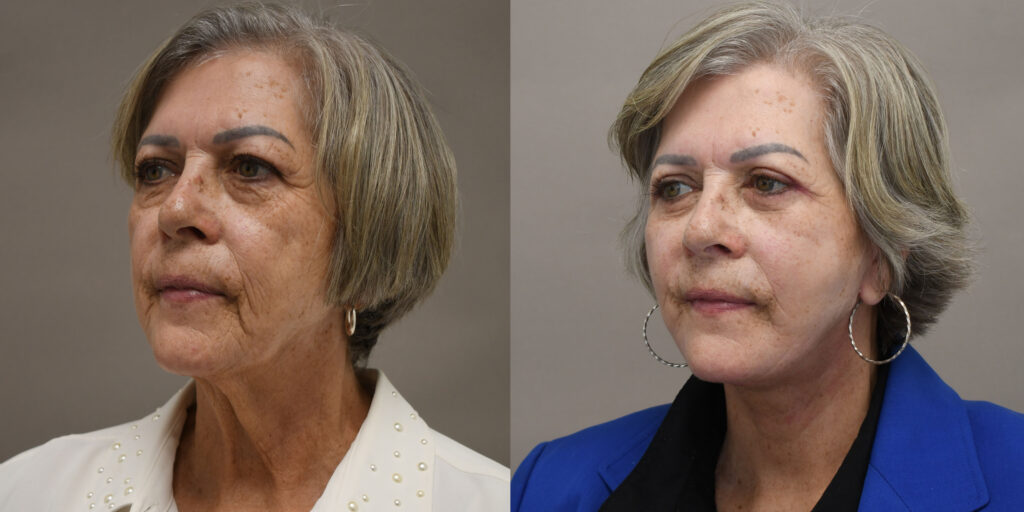
Beyond the Deep Plane: The Technical Details That Make My Facelift Different
Part 3 of a three-part series on my approach to facial and neck rejuvenation
A deep-plane facelift is not simply about releasing deeper tissues and pulling them upward. In my approach, the operation is customized to the individual anatomy of each face and neck.
The goal is not maximum tension or maximum change. It is to determine where each patient’s tissues need to move, how much they should move, and in what direction to restore youthful facial architecture while maintaining a natural appearance.
I Don’t Use the Same Vector for Every Face
One of the most important decisions in facelift surgery is the direction in which the deeper facial tissues are repositioned.
Faces age differently. Some patients develop predominantly vertical descent, others develop heavier jowling, loss of jawline definition, midface descent, or combinations of these changes. Applying the same direction of pull to every patient ignores these anatomical differences.
I therefore evaluate the optimal vector for each individual face rather than simply pulling the tissues backward or upward.
The objective is to restore the patient’s natural facial proportions and not create a generic “facelift” appearance.
The “Sailboat” Modification: Repositioning Without Overfilling
Another refinement of my technique is what I refer to as my sailboat modification.
Rather than relying on excessive volume to compensate for facial descent, I use the patient’s own mobilized deep tissues to create a smooth transition and natural contour as the face is repositioned.
This is particularly important because aging is not simply a problem of volume loss. Much of what appears to be volume loss is actually volume that has descended or redistributed.
By carefully repositioning these tissues and controlling how they are secured, I can restore contour while minimizing the need to overfill the face.
The result I am seeking is not a fuller face. It is a better-positioned face.
Preserving the Skin–Muscle Relationship in the Neck
My neck technique follows the same philosophy.
Traditional approaches may involve broad separation of the skin from the platysma muscle beneath it. I deliberately limit this dissection whenever possible.
By preserving much of the natural skin-to-platysma attachment, the skin and muscle continue to function as a connected structural unit. I then work beneath this layer to release the deeper restrictions that prevent the neck from being repositioned effectively.
This allows me to elevate the lower neck while maintaining the natural structural architectural support between the skin and underlying muscle.
I believe this is particularly important for creating a neck that is not only smooth immediately after surgery, but structurally supported as it heals and ages.
The Mastoid Crevasse Technique and the Gonial (jaw) Angle
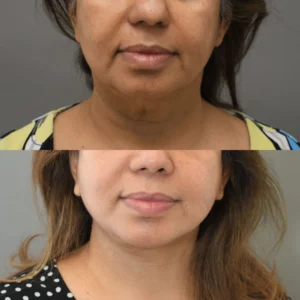
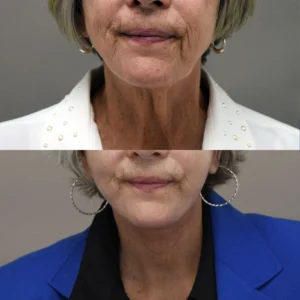
One of the defining features of an attractive neck is not simply a tight neck—it is the relationship between the neck, jawline, and gonial angle at the back of the mandible.
I use a technique I call the mastoid crevasse technique to optimize this region. This technique allow a deeper neck line and more jaw definition.
The tissues are strategically positioned around the mastoid region behind the ear to improve the transition between the posterior jawline and upper neck. This allows me to better expose and define the patient’s natural gonial angle rather than simply pulling the neck laterally.
That distinction can have a significant effect on how the jawline appears from both the front and profile.
The objective is to reveal the patient’s underlying anatomy—to create a cleaner mandibular border, stronger jaw-neck transition, and more elegant contour beneath the ear.
Repositioning Rather Than Pulling
These refinements all reflect the same philosophy.
A facelift should not look good because the face has been pulled tightly. It should look good because the anatomy has been released, repositioned and supported in the appropriate location.
That means choosing the vector based on the individual face, preserving important anatomical relationships, using the patient’s own tissues rather than automatically adding volume, and paying attention to subtle areas such as the gonial angle and lower neck that can determine whether a result looks merely tighter or genuinely rejuvenated.
My goal is ultimately quite simple:
I want my patients to look like themselves—only with their facial anatomy restored to a more youthful position.