
“A facelift should not make you look like a different person”.
For most of my patients, the goal is much simpler: they want to look more like themselves again. They want the jawline they used to have, less heaviness around the lower face, a cleaner neck, and a face that looks rested and refreshed rather than pulled or operated.
Achieving that result requires more than tightening loose skin.
Facial aging occurs at multiple levels. The skin changes, but the deeper tissues of the face also descend. Fat pads shift downward, retaining ligaments influence where tissues collect, the jawline loses definition, and the platysma and other structures of the neck change with time.
For this reason, my approach to facelift and neck lift surgery focuses on restoring facial anatomy rather than simply tightening the face.
The objective is not maximum change.
It is to determine what has changed in your face, reposition those structures appropriately, and create a result that looks natural, balanced, and appropriate for you.
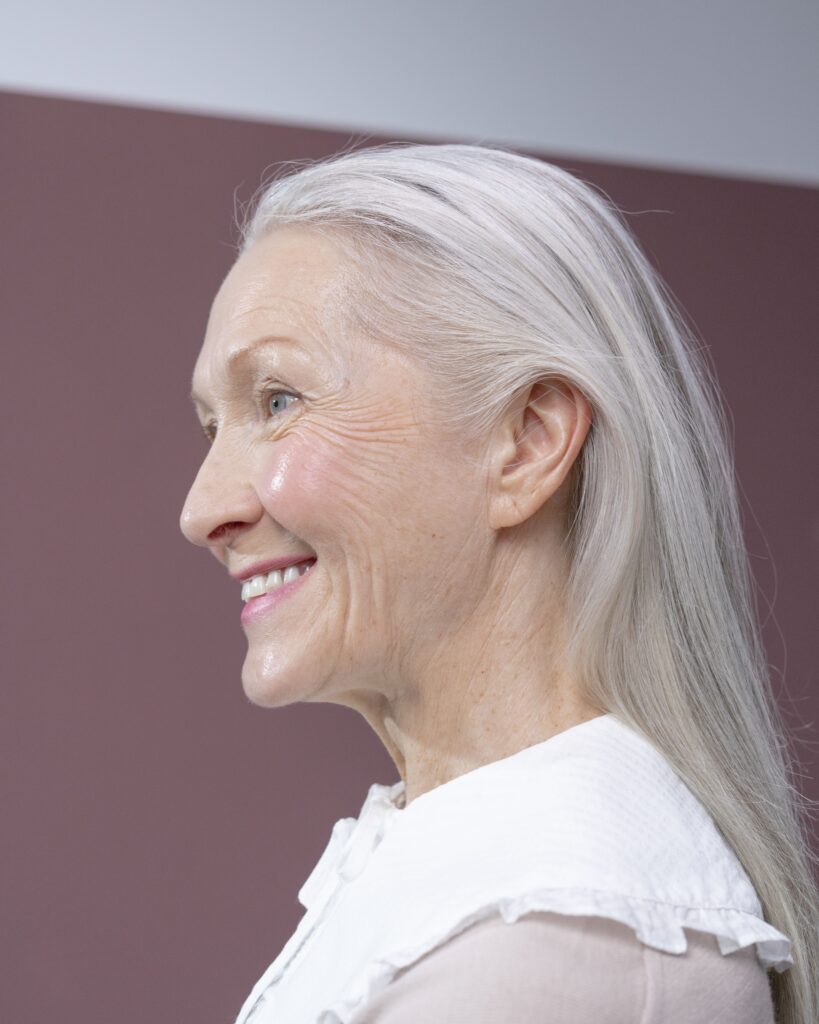
Patients often describe facial aging as “loose skin,” but what they see in the mirror is usually the result of several changes occurring together.
Common concerns include:
A facelift primarily addresses aging of the cheeks, lower face, and jawline. A neck lift addresses the structures beneath the jaw and within the neck.
In many patients, these areas should be considered together because the jawline is where the face and neck meet.
neck lift surgery can be efficient and precise, allowing for smooth healing, a relatively rapid recovery, and results that appear balanced, rejuvenated, and authentic.
I think about facial rejuvenation in layers.
With age, skin becomes thinner and loses elasticity. Sun exposure, pigmentation, fine lines, and changes in texture can also make the face appear older.
A facelift can remove redundant skin and improve its position, but it does not directly correct skin texture, pigmentation, or fine lines. Those concerns may be better treated with treatments such as laser resurfacing or other skin therapies.
The youthful face has characteristic areas of fullness and smooth transitions between the cheeks, jawline, and surrounding structures.
As we age, some of this volume is lost, but some of what appears to be volume loss is actually volume that has moved.
Fat pads descend with the deeper tissues of the face. This contributes to flattening of the cheeks, heaviness around the mouth, and accumulation of tissue along the jawline.
For this reason, my first response to an aging face is not necessarily to add more volume.
Sometimes the better solution is to restore existing tissue to where it belongs.
Beneath the skin is a deeper structural layer commonly referred to as the SMAS, or superficial musculoaponeurotic system.
This layer and its relationship to the facial retaining ligaments play an important role in how the face ages.
When deeper facial tissues descend, simply pulling the skin tighter does not fully correct the underlying problem.
Modern facelift surgery therefore focuses on repositioning and supporting these deeper structures rather than relying on skin tension alone.
The neck has its own anatomy.
Loose skin may be part of the problem, but aging of the neck can also involve the platysma muscle, superficial and deeper fat, structural attachments, and in selected patients deeper structures beneath the platysma.
Understanding which component is creating the problem is important because not every aging neck should be treated in exactly the same way.

The term deep plane facelift has become extremely popular.
I perform deep-plane facelift surgery, but I do not believe every patient needs exactly the same operation.
Deep plane, SMAS, extended SMAS, vertical lift, and other facelift techniques are tools. None of these terms by itself guarantees a beautiful result.
The operation should follow the diagnosis.
When I evaluate your face, I look at your cheek position, jowls, jawline, neck anatomy, skin quality, volume distribution, bone structure, previous procedures, facial movement, and—most importantly—what bothers you and what you want to accomplish.
Only then do I determine which tissues need to be released, where they should be repositioned, and in what direction they should move.
Your facelift should be designed for your face, rather than your face being adapted to a particular facelift technique.
A deep plane facelift addresses facial aging beneath the skin by releasing selected deeper attachments and repositioning the skin, connective tissue, and descended facial tissues together.
This is fundamentally different from asking the skin alone to hold the result.
In the appropriate patient, releasing these deeper structures allows me to reposition tissues that have descended and restore more youthful facial architecture with less reliance on excessive skin tension.
This can improve:
However, “deep plane” should not be treated as a marketing term or as a guarantee of a good facelift.
Where the tissues are released, how they are mobilized, the direction in which they are repositioned, how they are supported, and how the face and neck are balanced are ultimately more important than the name of the operation.
A jowl is not simply a piece of loose skin hanging over the jaw.
As facial tissues descend, they encounter anatomical attachment points that restrict their movement. Tissue can then accumulate along the mandibular border, producing the characteristic fullness we call a jowl.
At the same time, changes beneath the jaw can further obscure the mandibular border.
For this reason, creating a beautiful jawline often requires addressing the problem from both above and below.
From above, the descended tissues of the lower face must be appropriately repositioned.
From below, the neck may need to be reshaped and supported.
The goal is not merely to eliminate a jowl. It is to recreate a smooth, continuous transition from the cheek along the jawline and into the neck.
Patients frequently ask whether they need a facelift, a neck lift, or both.
The answer depends on anatomy.
Some patients primarily have facial descent and jowling. Others have a relatively youthful face but significant neck laxity. Many patients have changes in both areas.
The jawline sits directly between the two.
If the lower face is rejuvenated but significant neck laxity remains beneath it, the jawline may still lack definition. Conversely, tightening the neck without adequately addressing tissue descending from above can leave residual jowling.
When appropriate, treating the face and neck together allows me to restore the entire lower facial contour as one anatomical system.
My neck-lift technique follows the same principle as my facelift: reposition and support rather than simply pull tighter.
Whenever appropriate, I limit unnecessary separation between the skin and platysma so that they can continue to behave as a connected structural unit.
I can then work beneath this layer to address the deeper restrictions preventing the neck from being repositioned effectively.
The exact operation depends upon the patient’s anatomy.
Treatment may involve management of:
The objective is a cleaner neck and jawline without creating a neck that appears unnaturally tight.
One area that receives particular attention in my neck-lift technique is the transition between the back of the jaw and the upper neck.
A beautiful neck is not simply a tight neck.
The gonial angle—the angle at the back of the jaw—and the contour beneath and behind it contribute significantly to how clearly the jawline is seen.
I use a modification I call the mastoid crevasse technique to improve support in this region and deepen the transition between the posterior jawline and neck.
Rather than simply pulling the neck laterally, the objective is to reveal and define the patient’s natural mandibular anatomy.
This can create a cleaner jawline, greater definition beneath the ear, and a more elegant transition from the face into the neck.
I do not use the same vector of lift for every face.
Some faces age predominantly downward. Some develop greater heaviness along the jawline. Others show more cheek descent, neck laxity, or a combination of changes.
Pulling every face in exactly the same direction ignores those differences.
The direction and amount of repositioning should be determined by the patient’s anatomy.
This is one of the most important differences between simply making a face tighter and actually restoring facial shape.
Facial aging is frequently described as volume loss, and volume restoration can certainly be valuable.
But not every aging face needs to be filled.
Sometimes volume has not disappeared—it has descended.
When appropriate, I use the patient’s mobilized facial tissues to restore smoother transitions and more youthful contours rather than automatically compensating for descent with fillers or excessive fat grafting.
My goal is generally not to create a fuller face.
It is to create a better-positioned face.
When true volume loss exists, fat grafting or other methods of volume restoration can then be added selectively.
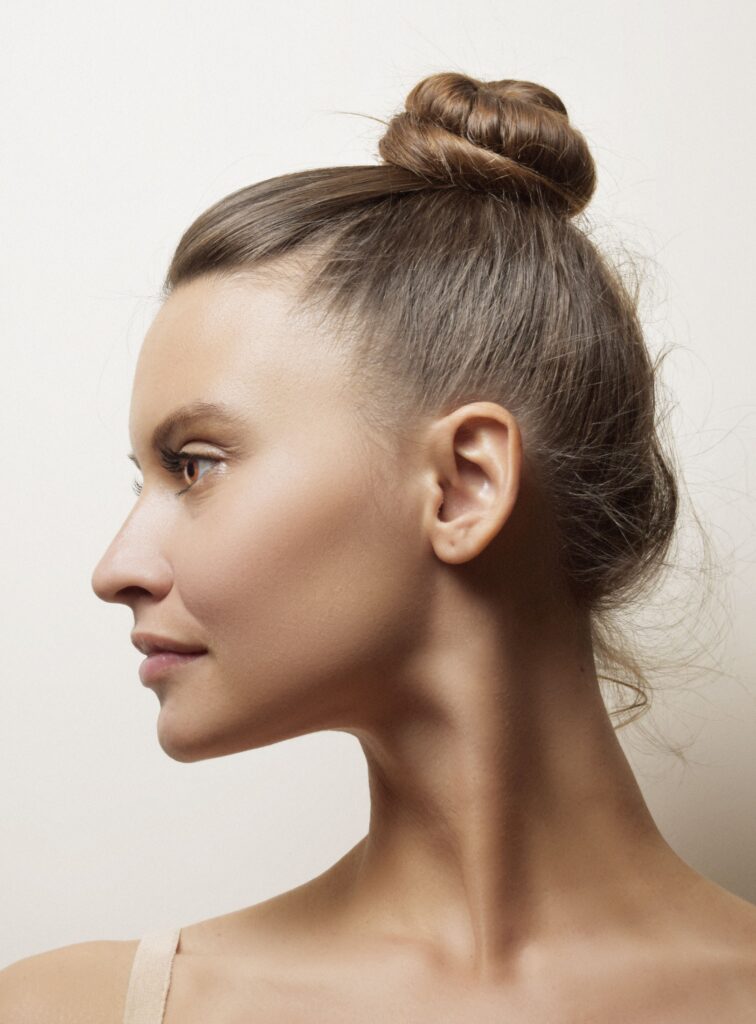
This may be the most important question.
A natural facelift should not be obvious.
You should not look like someone else’s interpretation of a younger face. You should look like yourself, with the features that define you preserved.
Several principles contribute to that result.
The skin should not be responsible for holding the deeper face in position.
When the underlying tissues are appropriately released, repositioned, and supported, the skin can be redraped without excessive tension.
Not every patient needs the same amount of cheek elevation, jawline correction, or neck tightening.
More is not automatically better.
Adding too much volume can make an aging face look different rather than younger.
Volume should be restored where it is truly needed.
A face is not a photograph.
It smiles, speaks, laughs, and expresses emotion.
A facelift that looks natural at rest but changes the patient’s characteristic smile or animation is not, in my view, a truly natural result.
You should still look like yourself when you smile.
A facelift and skin treatment accomplish different things.
A facelift primarily changes shape and position. It addresses descended tissues, jowls, jawline definition, and laxity of the face and neck.
It does not directly correct every fine line, sunspot, pore, or textural change.
For patients who have both structural aging and significant skin aging, I may recommend combining or sequencing facelift surgery with treatments such as fractional CO2 laser resurfacing or other skin treatments.
I think of facial rejuvenation as addressing the different layers of aging with the treatment designed for each layer.
Not everyone who sees facial aging needs surgery.
Injectables can restore selected areas of lost volume and soften certain lines. Neuromodulators can improve wrinkles caused by muscle activity. Lasers and other skin treatments can improve skin quality. Nonsurgical tightening procedures may provide modest improvement in selected patients.
But these treatments cannot reproduce what a facelift does when significant tissue descent, jowling, or neck laxity is present.
The important question is not:
“What treatment is best?”
It is:
“What anatomical problem am I trying to correct?”
Once that question is answered, choosing the appropriate treatment becomes much easier.
There is no correct age for facelift surgery.
I have seen patients at different ages with very different degrees of facial aging.
A better question is whether the changes bothering you are caused by problems that a facelift can effectively correct.
You may be a candidate if you are bothered by:
Good general health, realistic expectations, and an understanding of the recovery process are also important.
During consultation, my job is not simply to determine whether I can perform a facelift.
It is to determine whether a facelift is the right operation for what bothers you.
I begin with what you see.
What bothers you when you look in the mirror? What has changed? What would you like to restore? And equally important, what features do you not want changed?
I then evaluate the face anatomically.
This includes the cheeks, jowls, jawline, neck, skin, fat distribution, facial volume, underlying bone structure, previous surgery or treatments, and facial movement.
From there, we can determine which components of aging should be treated and which should be left alone.
Your plan may involve a facelift, neck lift, eyelid surgery, fat grafting, skin resurfacing, or a combination of procedures. In some patients, surgery may not yet be appropriate at all.
The operation should be built around the patient—not the other way around.
Recovery varies with the extent of surgery and the procedures performed.
Swelling, bruising, tightness, and temporary changes in sensation are expected during the early healing period. These improve progressively rather than disappearing overnight.
One important distinction is the difference between being medically recovered and looking completely natural.
Patients generally become socially presentable well before every trace of swelling has resolved. Subtle changes continue as the tissues settle and scars mature.
During your consultation, I will discuss the expected recovery based on your specific operation and help you plan appropriately around work, travel, exercise, and social commitments.
Facelift incisions are generally placed around the natural contours of the ear and extend into areas where they can be concealed within normal anatomical transitions and the hairline when necessary.
Incision design is important.
The objective is not only to hide the scar but also to avoid distortion of the hairline, tragus, earlobe, and other structures around the ear.
Scars mature over time and are monitored throughout the healing process.
A facelift does not stop aging.
It repositions tissues that have changed with aging and establishes a new starting point.
How a result evolves over time depends on many factors, including skin quality, anatomy, genetics, sun exposure, weight changes, lifestyle, the extent of the original aging process, and the surgical technique used.
My goal is therefore not simply to create an impressive result immediately after surgery.
I want to create a face and neck that are structurally supported, balanced, and capable of aging naturally over time.
Facelift surgery combines anatomy, technical execution, judgment, and aesthetics.
Technique matters, but knowing when and how to use a technique matters even more.
When considering a facelift surgeon, look carefully at more than the terminology used to describe the operation.
Consider:
I am board-certified in both Plastic Surgery and Otolaryngology–Head and Neck Surgery, giving me a background in both aesthetic plastic surgery and the anatomy of the face and neck.
My approach to facial rejuvenation has evolved through years of performing surgery, following patients over time, and continually refining the technical details that determine whether a result looks simply tighter or truly rejuvenated.
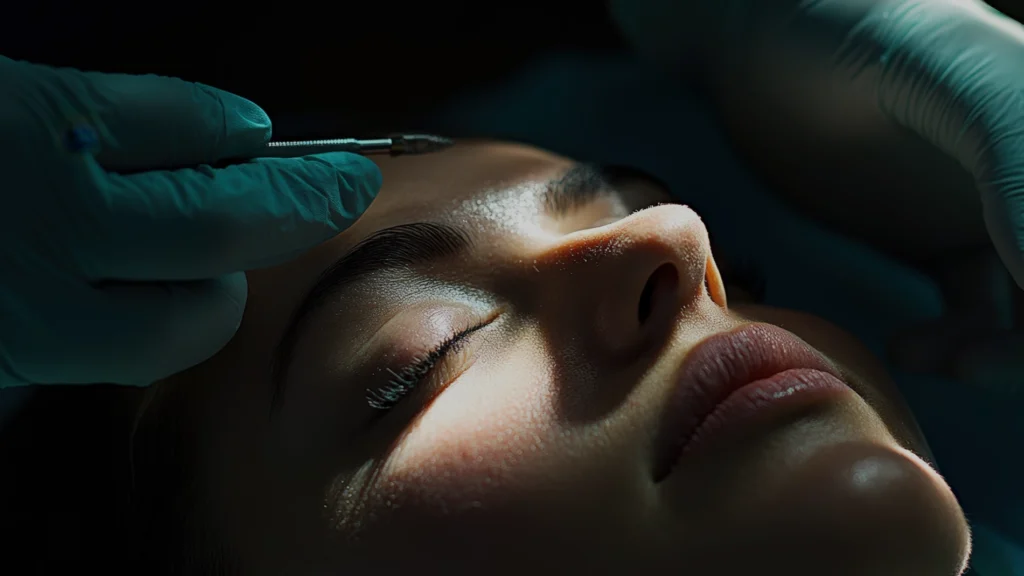
I do not believe there is one ideal facelift.
There is no single vector, no single technique, and no predetermined amount of tightening that is appropriate for every patient.
The face has to be evaluated as a whole.
Sometimes that means releasing and repositioning the deeper facial tissues. Sometimes it means addressing the neck. Sometimes volume should be restored. Sometimes the skin itself needs treatment. Frequently, several of these components work together.
The goal is to identify what aging has changed and correct those changes without erasing the features that make the patient recognizable.
A successful facelift should not make people wonder who performed your surgery.
Ideally, they should simply think that you look rested, healthy, refreshed—and remarkably good for yourself.
That is the result I am trying to achieve.
Dr. Afshin Parhiscar performs individualized facelift and neck lift surgery in Walnut Creek, California, serving patients throughout the East Bay and greater San Francisco Bay Area.
If you are considering facial rejuvenation, the first step is a detailed evaluation of your facial anatomy, the changes that concern you, and what you would, and would not, like to change.
